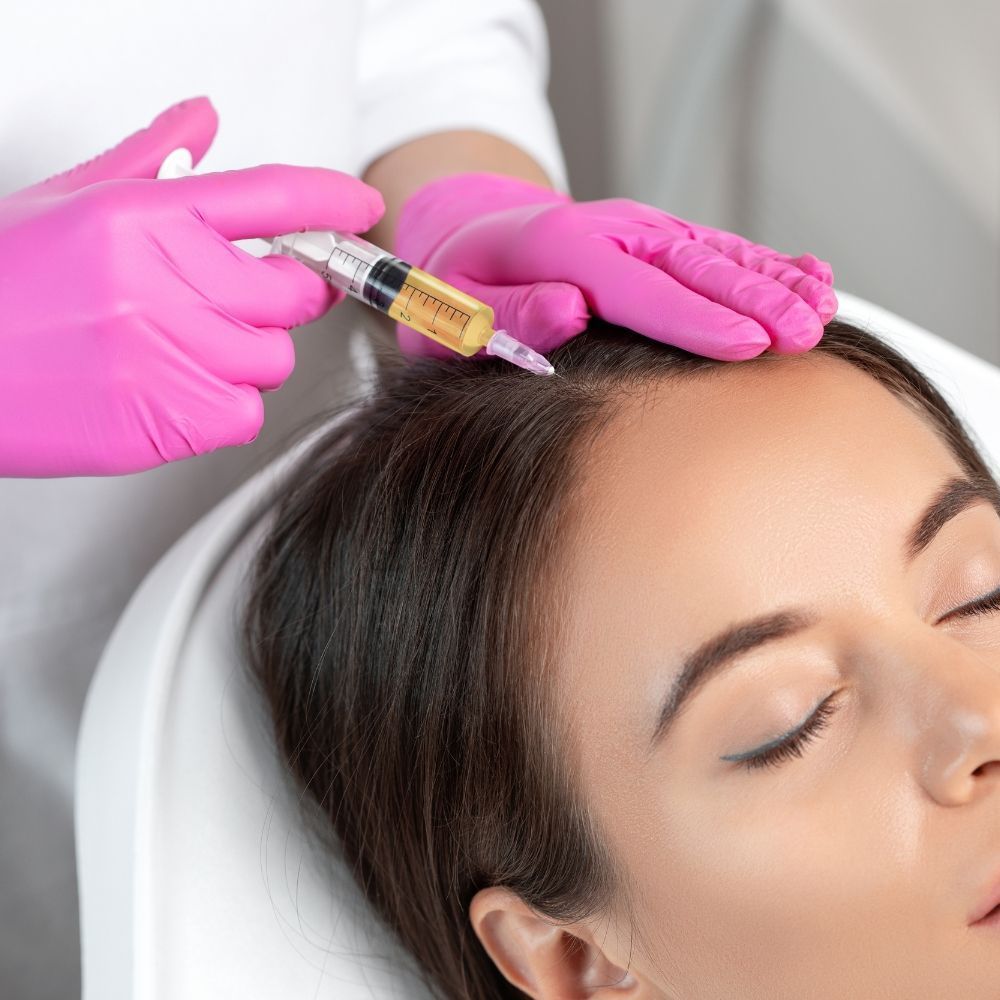
Exosomes Hair
Restoration
Cellular intelligence for your hair.

Exosome therapy delivers billions of nano-scale cellular messengers loaded with growth factors and genetic regulators to hair follicles, driving profound follicular regeneration and hair restoration.

Book an Appointment


Florida Insurances
Georgia Insurances
New York Insurances
South Carolina Insurances
North Carolina Insurances
The Most Advanced Hair Restoration Available Reprogram How
Your Follicles Behave

Exosomes are nano-scale extracellular vesicles, typically 30 to 150 nanometers in diameter, produced by stem cells as a mechanism of intercellular communication. When applied to the scalp in conjunction with microneedling, stem cell-derived exosomes deliver their cargo of growth factors, messenger RNA, and regulatory microRNA directly to hair follicles and scalp tissue cells. This molecular cargo reprograms follicular behavior at the gene expression level, stimulating dormant follicles, extending the anagen growth phase, and improving the overall scalp environment for sustained hair growth.

At Superior Health Medical and Wellness, Dr. Akers uses physician-grade exosome preparations derived from extensively characterized stem cell lines, applied in conjunction with scalp microneedling for maximum follicular delivery. Exosome hair restoration represents the current frontier of biological hair loss treatment, offering a level of follicular reprogramming that goes beyond what PRP growth factors alone can achieve. For patients with significant hair loss or those who have seen limited results from other treatments, exosomes often produce the most meaningful improvement available without surgery.

Book Your Appointment

Exosomes hair restoration at Superior Health Medical and Wellness
Exosomes Hair Restoration Services What We Provide

From scalp exosome treatment with microneedling to combination exosome and PRP protocols and comprehensive hair restoration programs, Superior Health provides the most advanced biological hair restoration available. Explore the services below.

The core exosome hair restoration treatment combines scalp microneedling with exosome application during and after the procedure. Microneedling creates channels in the scalp that allow the exosome preparation to penetrate to follicular depth while simultaneously providing the wound stimulus that primes the scalp for regeneration. The exosomes absorbed through these channels deliver their growth factor and RNA cargo directly to follicular stem cells, triggering a comprehensive regenerative response.
Combining exosomes with PRP creates the most comprehensive biological hair restoration protocol currently available. PRP contributes concentrated platelet growth factors that activate follicles through receptor binding. Exosomes add the microRNA and protein cargo that reprograms gene expression in follicular cells. The two treatments work through complementary mechanisms that reinforce each other, producing more complete follicular activation and better hair restoration outcomes than either treatment used alone.
Some patients with significant hair loss have seen limited or inadequate results from PRP treatment alone. Exosome therapy is the appropriate next step for these patients, as the molecular complexity and potency of the exosome cargo produces a more powerful follicular response than growth factors alone. Patients who have not responded adequately to PRP often show meaningful improvement with exosome-based protocols, particularly when combined with scalp microneedling for enhanced delivery.
For men with androgenetic alopecia, exosome therapy targets the DHT-miniaturized follicles with growth factors and microRNA that promote follicular recovery and extension of the anagen phase. The Wnt signaling pathway proteins and VEGF contained in exosomes directly counteract the miniaturization process at the gene expression level, producing improvement in follicular size and hair shaft diameter that translates to visible density gains over a series of treatments.
Women with androgenetic alopecia, telogen effluvium, or diffuse thinning from hormonal changes respond well to exosome scalp treatment because the exosome cargo addresses the follicular biology directly, independent of the systemic hormonal drivers. Dr. Akers designs female exosome hair protocols that take into account the distribution of loss, the likely contributing factors, and any concurrent hormonal management to produce the most complete restoration possible.
Following the initial exosome series, maintenance treatment every six to twelve months sustains the follicular activation and prevents resumed miniaturization. Because exosomes produce changes in gene expression that persist beyond the treatment itself, fewer maintenance sessions are required than with PRP alone. Dr. Akers designs a maintenance schedule that provides the minimum necessary treatment frequency to sustain the improvements achieved during the initial series.
Why It Matters Beyond Growth Factors.
Into Gene Expression.
Exosomes hair restoration at Superior Health Medical
01 Exosomes Carry 1,000 Times More Growth Factors Than PRP

PRP concentrates your own platelets for a meaningful biological signal. Stem cell-derived exosomes carry a payload of growth factors, RNA, and signaling proteins that exponentially exceeds what PRP can deliver, with some preparations containing up to 1,000 times more growth factors than equivalent volumes of PRP. This difference in potency explains why patients with significant hair loss or limited PRP response often achieve meaningful improvement with exosomes.

02 MicroRNA Reprograms Follicular Gene Expression

PRP growth factors work at the protein receptor level, activating follicular cells through specific receptor-ligand interactions. Exosomal microRNA goes deeper, entering the cell and altering which genes are expressed. The microRNA cargo in exosomes can upregulate hair growth genes, downregulate genes that promote follicular miniaturization, and activate the Wnt signaling pathway that drives follicular stem cell activation, producing more fundamental and lasting changes in follicular behavior.

03 It Is the Appropriate Treatment for Significant or Resistant Hair Loss

Patients with moderate to significant hair loss, those who have seen limited results from other treatments, or those who want the most potent biological intervention available are the ideal candidates for exosome hair restoration. The greater biological complexity and potency of exosome therapy is most meaningful for patients who need more than growth factor stimulation alone. Dr. Akers discusses candidacy and expected outcomes at your consultation.

Superior Health Medical & Wellness
Wake Every
Follicle Up

Billions of cellular messengers loaded with growth factors and RNA that reprogram how your hair follicles behave, triggering regeneration at a level PRP alone cannot reach.

Book a Consultation

Exosome hair restoration science at Superior Health Medical
The Science How Exosomes Restore
Hair Follicle Function

Hair follicles contain a population of stem cells in the bulge region that are responsible for cycling through the phases of hair growth. In androgenetic alopecia, DHT-induced changes in gene expression cause these stem cells to produce progressively shorter, thinner anagen phases with each cycle. Exosomal microRNA delivered to follicular stem cells can reverse some of these gene expression changes, restoring the cell's tendency to produce longer anagen phases and more robust hair shafts.

The Wnt signaling pathway is one of the most important regulators of hair follicle cycling and follicular stem cell activation. Exosomes from stem cells contain Wnt pathway proteins and regulatory RNA that activate this pathway in dormant follicles, signaling the transition from telogen to anagen and the initiation of new hair shaft production. This Wnt activation is a key mechanism by which exosomes produce follicular reactivation that exceeds what conventional growth factors achieve.

VEGF contained in exosomes promotes angiogenesis around the follicular unit, improving the blood supply and nutrient delivery to the follicle. This improved vascular support sustains the energy-intensive active growth phase and contributes to the production of thicker hair shafts with each cycle. The combination of direct follicular reprogramming through microRNA and improved follicular support through enhanced vascularity produces comprehensive hair restoration that addresses the follicle from multiple angles simultaneously.

Exosome hair restoration treatment at Superior Health Medical and Wellness
Your Treatment The Exosome Hair
Restoration Experience

Exosome scalp treatment begins with application of topical numbing cream to the scalp. The exosome preparation is applied to the scalp during and after the microneedling procedure, absorbed through the micro-channels to follicular depth. The anti-inflammatory properties of the exosomes themselves reduce post-treatment scalp irritation compared to microneedling alone, and most patients find the recovery comfortable and brief.

Post-treatment scalp redness resolves within 12 to 24 hours. Hair washing can resume the following day. A standard initial exosome hair restoration series involves two to three sessions spaced four to six weeks apart. Because each session produces a profound biological change in follicular gene expression, fewer sessions are typically required than with PRP alone. Results develop progressively over three to six months after the initial series as follicular reprogramming effects unfold.

Schedule Your Exosome Hair Restoration Consultation
Frequently Asked Questions Your Questions,
Answered
PRP concentrates your own platelets to deliver growth factors that activate follicles through receptor binding. Exosomes are nano-scale vesicles from stem cells that carry growth factors plus microRNA and signaling proteins that alter gene expression in follicular cells. Exosomes work at a more fundamental biological level and carry a vastly more concentrated and complex molecular payload. The result is more complete follicular reprogramming, particularly for patients with significant hair loss or inadequate PRP response.
An initial series of two to three sessions spaced four to six weeks apart is standard. Because exosomes produce changes in gene expression that persist, fewer sessions are required than with PRP. Results continue developing for three to six months after the initial series. Maintenance sessions every six to twelve months sustain the follicular activation. Dr. Akers evaluates your hair loss pattern and response to determine the optimal number of sessions for your specific situation.
Yes. Patients who have seen limited results from PRP are often good candidates for exosome therapy. The greater potency and biological complexity of exosomes, particularly the microRNA-mediated gene expression changes and Wnt pathway activation, can produce meaningful follicular stimulation in patients whose follicles did not respond adequately to growth factor stimulation alone. Dr. Akers reviews your prior PRP treatment history at consultation when designing the exosome protocol.
Physician-grade exosomes from properly characterized stem cell sources have an excellent safety profile. They contain no living cells, carry no risk of immune rejection, and their anti-inflammatory properties reduce rather than increase scalp irritation. Side effects are limited to the effects of the scalp microneedling delivery method. Dr. Akers uses only rigorously sourced and characterized exosome preparations for all hair restoration treatments.
Yes. Exosomes work well alongside topical minoxidil, oral finasteride in appropriate patients, PRP, and scalp microneedling. Dr. Akers designs comprehensive hair restoration programs that use exosomes as the most advanced biological component alongside other treatments appropriate to each patient's situation. The combination of exosomes with PRP and microneedling produces the most complete follicular stimulation currently achievable without surgical intervention.