Treatment For Men Reclaim your hairline.
Physician-administered platelet-rich plasma therapy that delivers concentrated growth factors directly to hair follicles, stimulating regrowth and halting the progression of male pattern hair loss.
Book an Appointment








Real Results.
Male pattern hair loss, or androgenetic alopecia, affects the majority of men to some degree by their forties. The process is driven by dihydrotestosterone (DHT), a derivative of testosterone that binds to receptors in genetically susceptible hair follicles and causes them to miniaturize over time. As follicles miniaturize, they produce progressively thinner, shorter hairs before eventually ceasing production entirely. The process is gradual but relentless without intervention.
PRP therapy addresses hair loss by delivering concentrated platelet-derived growth factors directly to the scalp where follicles are miniaturizing or dormant. These growth factors, including platelet-derived growth factor (PDGF), vascular endothelial growth factor (VEGF), and insulin-like growth factor (IGF-1), activate the follicular stem cells responsible for the hair growth cycle, improve blood supply to the follicle, and counteract the miniaturization process at the cellular level. Dr. Akers administers PRP as a precise series of scalp injections placed at the level of the follicle, maximizing delivery to the tissue that needs it.
Book Your Appointment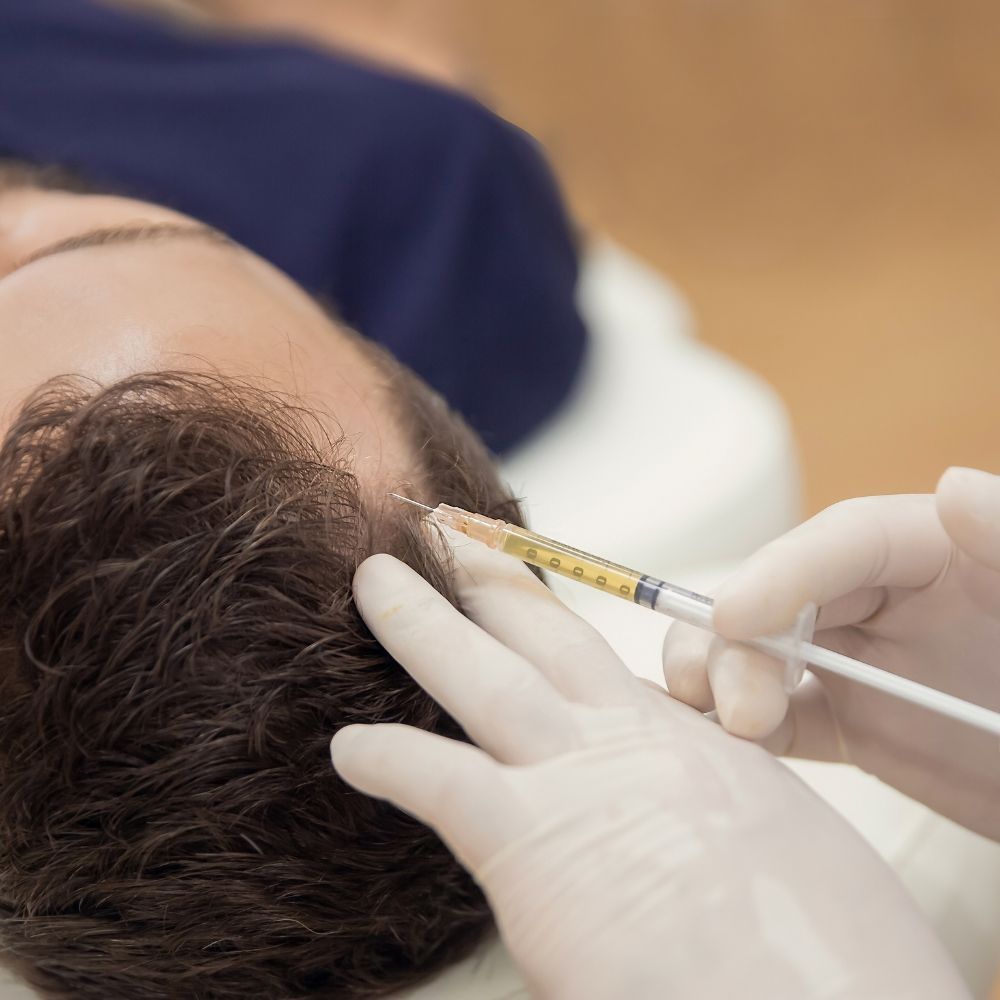
From targeted scalp PRP injections and combination microneedling protocols to ongoing maintenance programs for long-term results, Superior Health provides physician-administered PRP hair loss treatment for men. Explore the services below.
Better Outcomes.
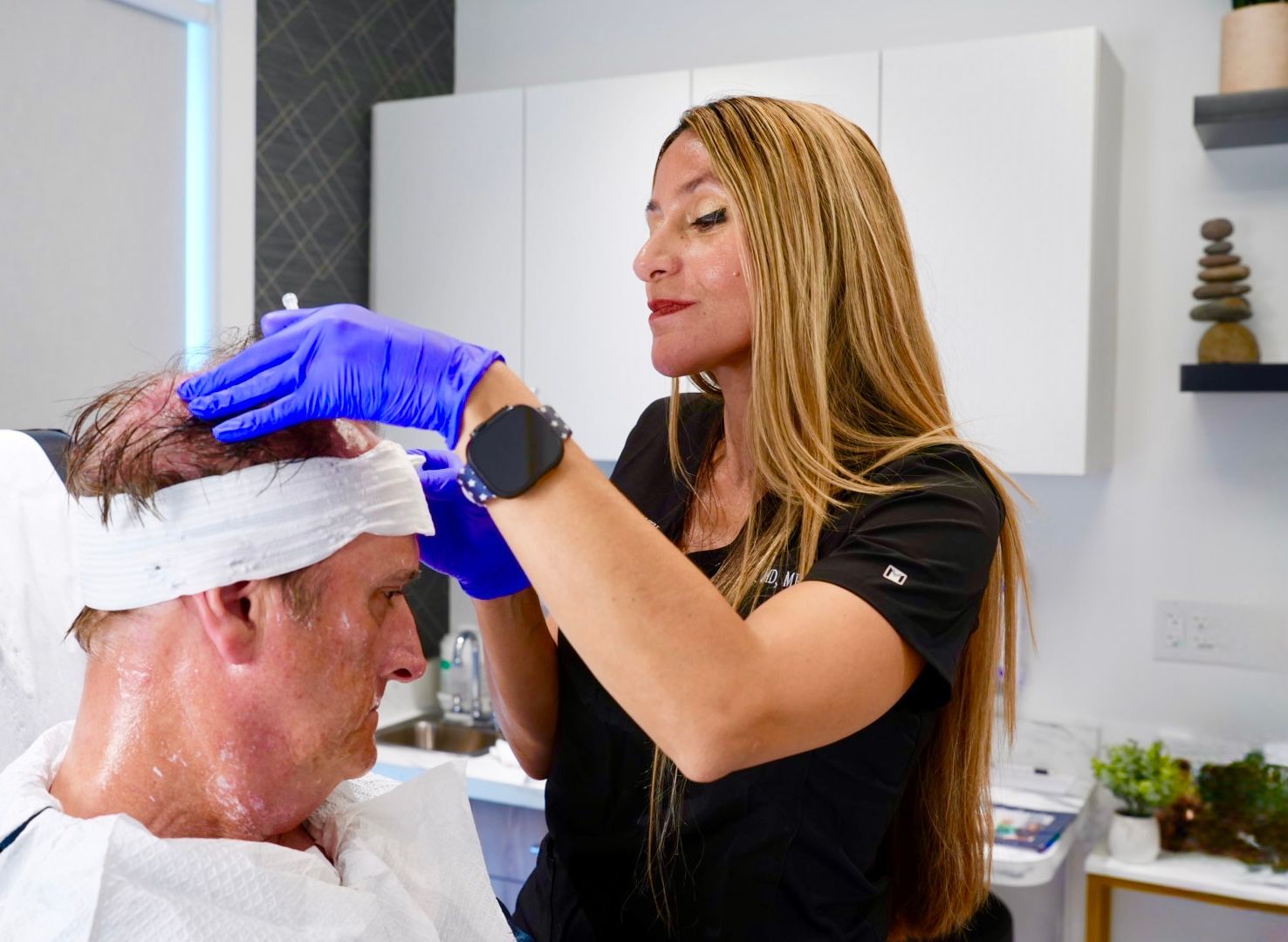
PRP is made from your own blood, concentrated to amplify the growth factors your platelets naturally contain. There are no synthetic chemicals, no hormonal manipulation, and no systemic side effects. The treatment works by giving your scalp's own biological healing system a concentrated signal to activate and sustain follicular function. This makes it one of the most physiologically natural approaches to hair loss available.
Oral hair loss medications like finasteride work systemically, blocking DHT conversion throughout the body with potential hormonal side effects. Topical minoxidil improves scalp blood flow but does not directly address follicular function. PRP delivers growth factors directly to the follicle, where they activate the follicular stem cells and growth phase machinery at the cellular level. This is a fundamentally more targeted intervention than systemic or surface treatments.
Follicles that have been dormant for many years become progressively less responsive to any intervention. PRP is most effective while follicles are still active, even if miniaturized. The difference in results between treating early-stage and late-stage hair loss is substantial. Patients who begin treatment at the first signs of thinning consistently achieve greater and more complete improvement than those who wait until recession is advanced.
You Started Losing
Platelet-rich plasma delivered directly to the scalp activates dormant follicles, strengthens existing hair, and gives your hairline the biological signal it needs to grow.
Book a Consultation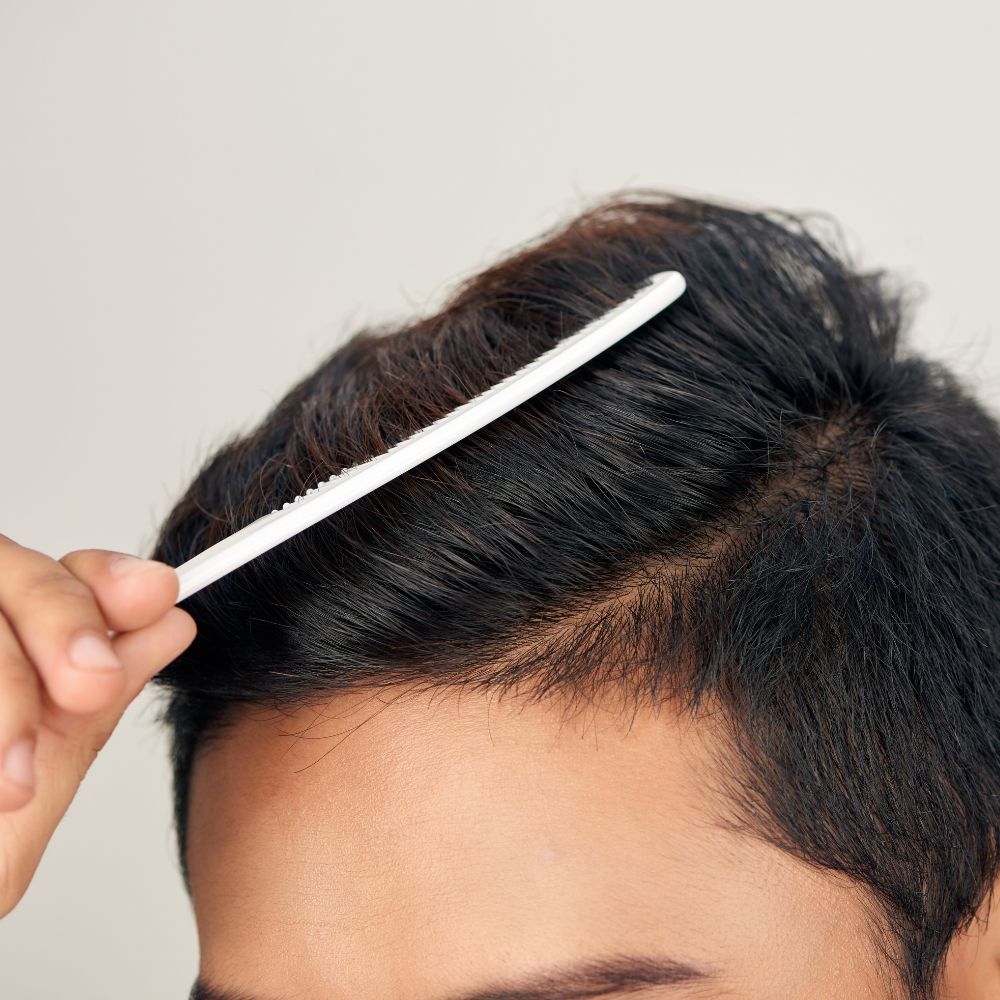
Hair Follicle Growth
PRP contains platelet concentrations three to five times higher than normal blood. When injected into the scalp, these concentrated platelets release their alpha granule contents: a mixture of growth factors including PDGF, VEGF, TGF-beta, IGF-1, and EGF. Each of these growth factors acts on specific receptors in the hair follicle and surrounding tissue to stimulate cell proliferation, improve vascularity, and activate the follicular stem cells in the bulge region of the hair follicle.
The hair growth cycle has three phases: anagen (active growth), catagen (transition), and telogen (resting/shedding). In androgenetic alopecia, the anagen phase shortens progressively while the telogen phase lengthens, producing thinner and shorter hairs with each cycle until the follicle stops producing hair entirely. PRP growth factors extend the anagen phase and shorten the telogen phase, shifting the proportion of active follicles in the growth phase and producing visibly thicker, more numerous hairs.
Clinical studies on PRP for androgenetic alopecia consistently demonstrate increases in hair density, hair diameter, and the proportion of follicles in the anagen phase compared to controls. Results are cumulative with each treatment session, and meaningful improvement is typically apparent after three to four sessions spaced four to six weeks apart.
From Your PRP Series
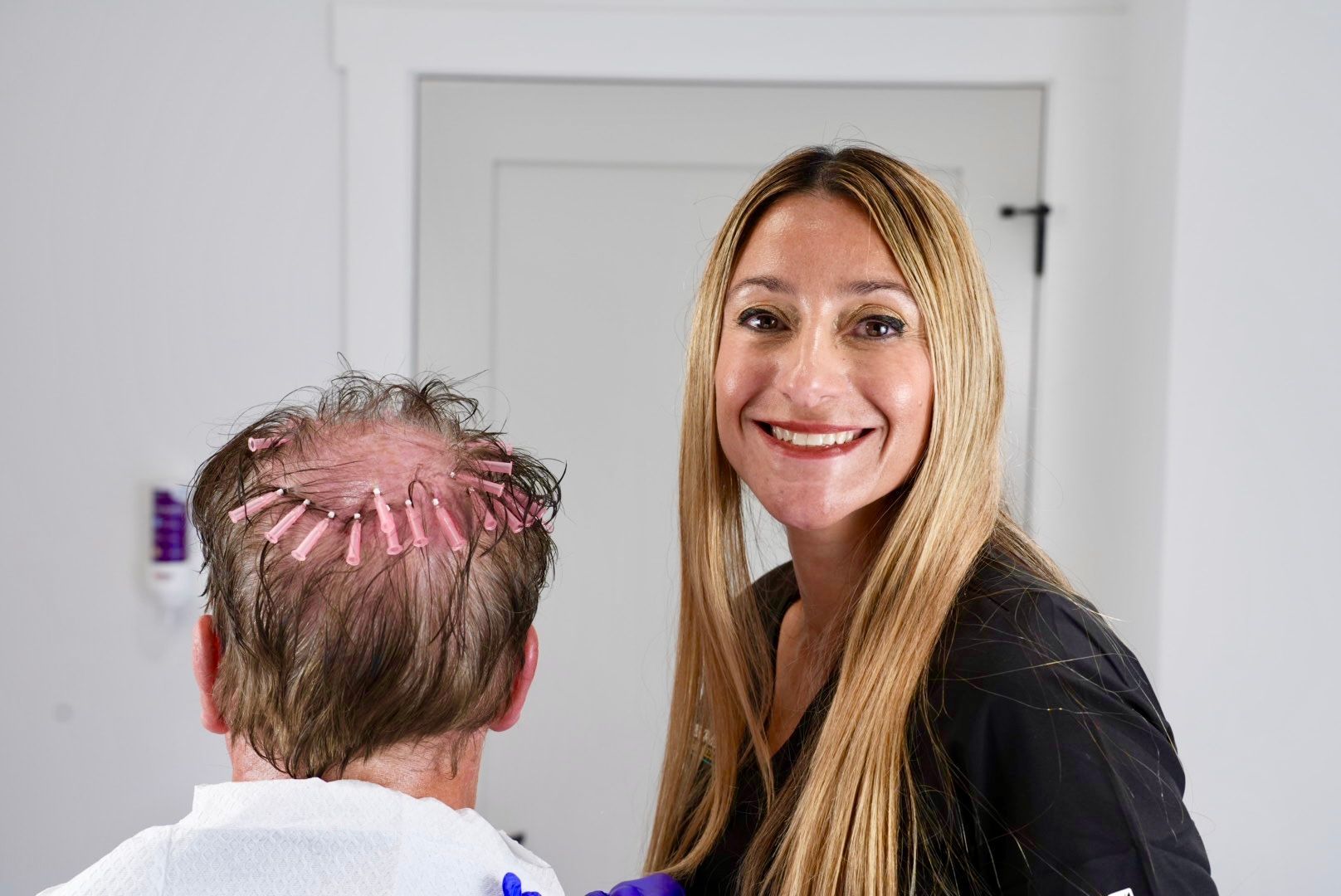
Your PRP session begins with a blood draw from your arm, typically 30 to 60 milliliters depending on the treatment area. The blood is placed in a centrifuge and spun at a specific protocol to separate the platelet-rich plasma from red blood cells and platelet-poor plasma. The resulting PRP is drawn into syringes and activated just before injection. Topical numbing cream is applied to the scalp during the preparation period.
Dr. Akers injects the PRP across the scalp in a precise pattern targeting the areas of active thinning. Most patients feel mild pressure during injection rather than significant pain with adequate numbing. The scalp may feel slightly tender for 24 to 48 hours after treatment. There is no required downtime, and patients typically return to normal activities the same day. Hair washing can resume the following morning.
Schedule Your PRP Hair Loss ConsultationAnswered
Changes Everything
Think of your scalp like a garden. PRP is the water, essential, life-giving, the foundation of everything. But a garden that only gets water still struggles without the right soil preparation, targeted nutrients, and ongoing support. Our stacking protocol layers multiple proven therapies together so each one amplifies the others. The result is not just more hair. It is a scalp environment actively optimized for growth.
The cornerstone of the protocol. Your own growth factors, concentrated and delivered directly to the follicle. PRP signals dormant follicles to reactivate, increases blood supply to the scalp, and creates the biological environment where everything else works better.
Creates thousands of micro-channels that drive PRP deeper into the dermis while triggering the scalp's own collagen response. Used in combination, microneedling significantly increases PRP absorption and extends the duration of follicle stimulation.
Ultra-fine absorbable threads placed at the scalp level stimulate collagen synthesis and increase circulation in areas where follicles have begun to miniaturize. This is particularly effective for restoring density along the hairline and crown.
Finasteride, minoxidil, or prescription-strength topicals are used to address the underlying hormonal or circulatory causes of hair loss. When combined with PRP, medications reinforce the biological gains and help sustain results between treatment sessions.
Photobiomodulation at specific wavelengths stimulates mitochondrial activity within hair follicles, increasing cellular energy and extending the anagen (growth) phase. LLLT is used between in-office sessions to keep follicles active and responsive to treatment.
- Single treatments address one pathway. Stacking addresses all of them simultaneously.
- Each therapy reinforces and amplifies the others. PRP works better with microneedling; LLLT extends PRP's effect window.
- A personalized stack means your protocol adapts to your specific loss pattern and response rate.
- Sustained results come from sustained follicle health, not one-time intervention.
During your consultation, Dr. Akers evaluates your scalp, reviews your loss history, and builds a stacking protocol specific to you. No generic plans. No guesswork. A strategy designed around your follicles and your goals.