Treatment For Women Fuller. Thicker. Yours.
Physician-administered platelet-rich plasma therapy tailored to the unique patterns and hormonal drivers of female hair loss, delivering targeted growth factor stimulation where your hair needs it most.
Book an Appointment








At Its Root Cause
Female hair loss is more complex and varied than male pattern loss. Women experience hair thinning from a wider range of causes, including female androgenetic alopecia (female pattern hair loss), telogen effluvium from hormonal shifts, nutritional deficiencies, thyroid dysfunction, postpartum hormone changes, and chronic stress. The pattern of loss in women is also different: rather than the receding hairline typical of men, women tend to experience diffuse thinning across the crown, widening of the part line, and overall reduction in hair density while the frontal hairline is often preserved.
At Superior Health Medical and Wellness, Dr. Akers approaches female hair loss with a thorough evaluation that considers both the pattern of loss and the underlying drivers before designing a treatment protocol. PRP is an effective treatment for female androgenetic alopecia and for women whose hair loss is related to follicular miniaturization, and it is often part of a broader treatment plan that may include hormonal evaluation, nutritional assessment, and appropriate medical management alongside the PRP series.
Book Your Appointment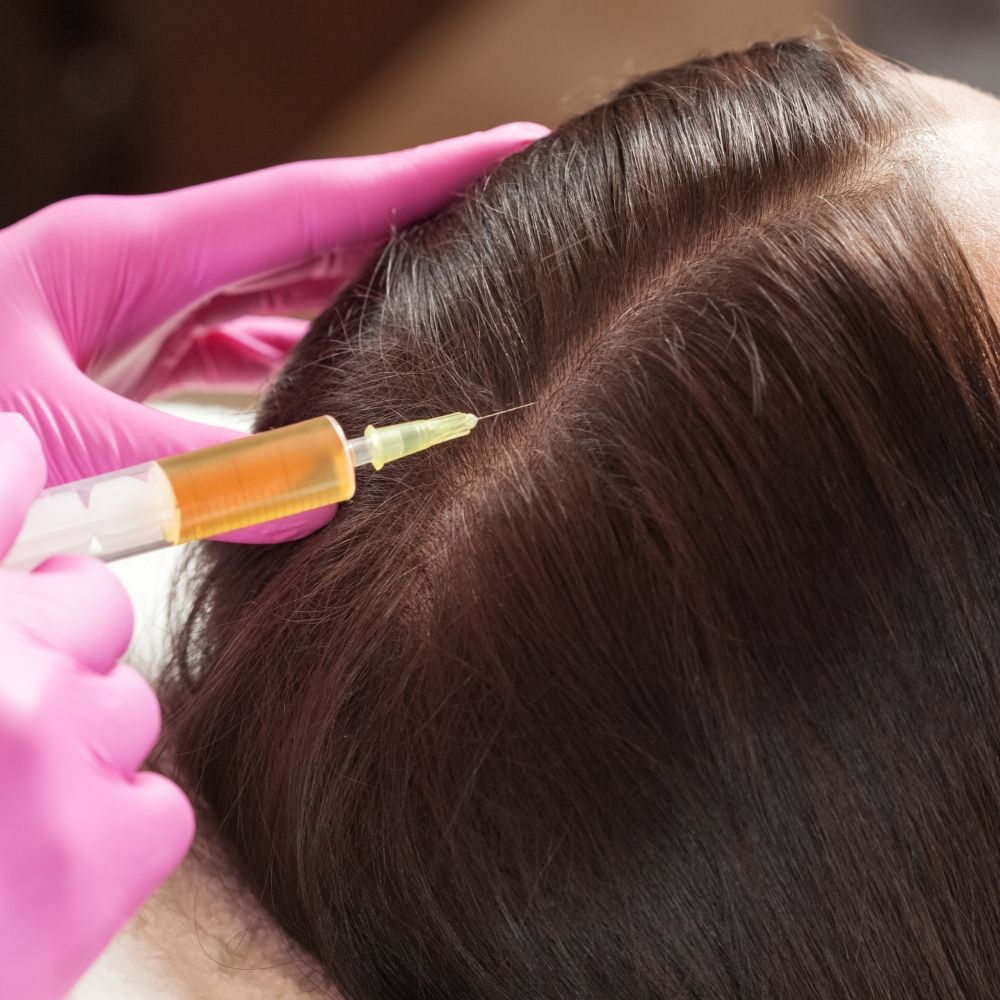
From scalp PRP for female pattern hair loss and postpartum shedding to combination protocols and comprehensive hair health programs, Superior Health provides physician-grade PRP treatment tailored to women. Explore the services below.
Deserves Physician Care
Hair loss in women is frequently dismissed or addressed with generic recommendations. The reality is that female hair loss has specific biological drivers that vary significantly between patients, and effective treatment requires identifying those drivers and tailoring the approach accordingly. Dr. Akers evaluates each patient's hair loss pattern, hormonal status, and medical history before designing a treatment protocol, rather than applying a one-size-fits-all approach.
Many women cannot use the systemic DHT-blocking medications used in male hair loss treatment due to hormonal effects and pregnancy concerns. PRP provides a targeted, locally acting treatment that delivers growth factor stimulation directly to the follicle without any systemic hormonal effects. This makes PRP an appropriate first-line treatment for women at any stage of life, including those who are premenopausal, perimenopausal, or postmenopausal.
Hair loss has a profound psychological impact on many women, affecting confidence, identity, and quality of life in ways that go beyond the physical. Effective treatment that meaningfully improves hair density produces real improvements in these quality-of-life measures. At Superior Health Medical and Wellness, Dr. Akers recognizes the significance of what patients are experiencing and approaches their care with the seriousness and sensitivity it deserves.
Is Possible
Physician-grade PRP treatment designed around the specific biology of female hair loss, with protocols that address hormonal shifts, diffuse thinning, and postpartum shedding.
Book a Consultation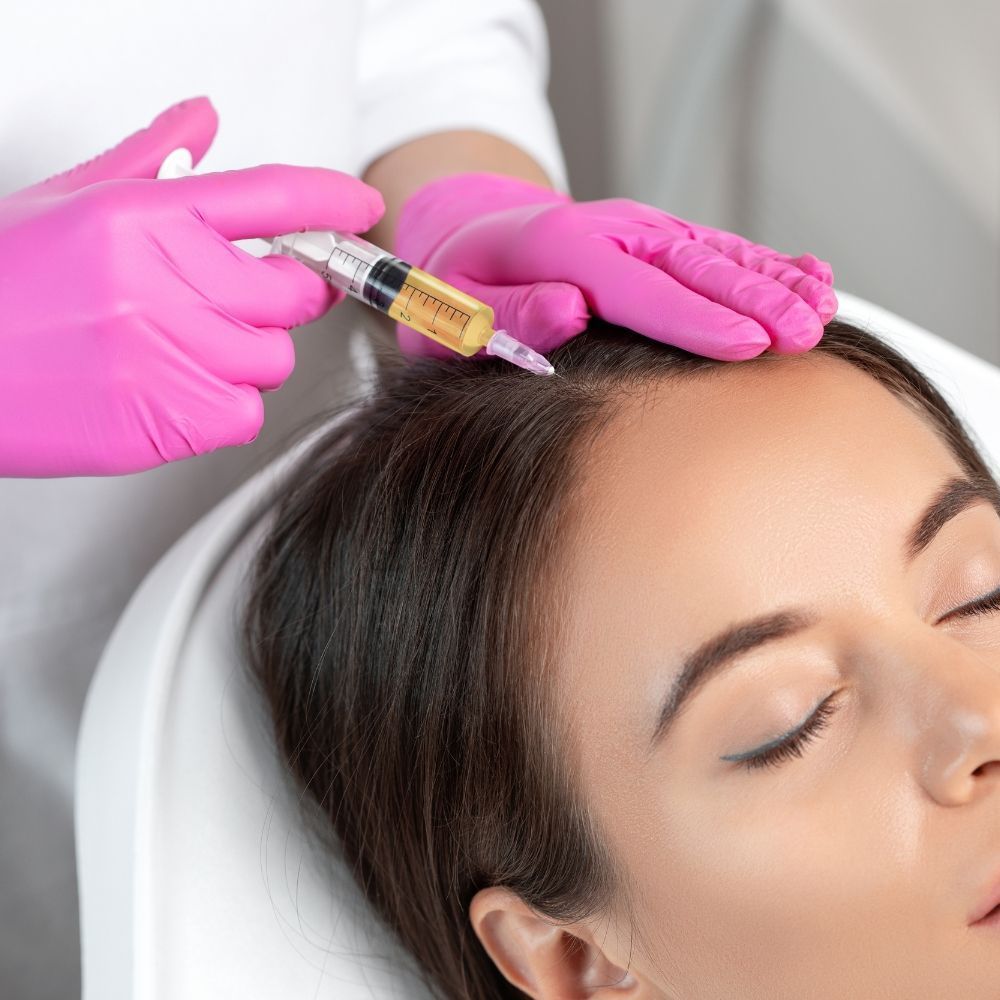
Hair Loss Develops
Female androgenetic alopecia follows a different pattern and timeline from male pattern loss but involves the same fundamental mechanism: DHT-induced follicular miniaturization in genetically susceptible follicles. In women, the Ludwig pattern is most common, characterized by diffuse thinning across the crown with preservation of the frontal hairline. The Norwood scale used for men does not apply to women, as the distribution of loss is fundamentally different.
Hormonal transitions are a particularly significant trigger for female hair loss. Perimenopause and menopause involve a relative increase in androgenic activity as estrogen levels decline, which can accelerate follicular miniaturization in women with androgenetic alopecia susceptibility. Postpartum estrogen withdrawal triggers the telogen effluvium phase in most new mothers. Thyroid dysfunction, both hypothyroidism and hyperthyroidism, can produce diffuse hair shedding that mimics or overlaps with androgenetic alopecia.
PRP growth factors act directly on the follicular stem cells in the hair bulge region, stimulating them to produce new matrix cells that drive the hair shaft upward. The growth factors also promote angiogenesis, improving the microvascular supply to each follicle and delivering more nutrients and oxygen to support active hair production. Over a series of treatments, these combined effects produce measurable increases in hair density and the thickness of individual hair shafts.

What to Expect
Your PRP treatment begins with a blood draw and centrifuge processing to prepare the platelet-rich plasma. Topical numbing cream is applied to the scalp before injection. Dr. Akers places PRP injections across the areas of active thinning, with the injection pattern designed to match your specific loss distribution. The procedure takes 60 to 90 minutes including preparation, and most patients find it comfortable with adequate numbing.
Post-treatment, the scalp may feel mildly tender for 24 to 48 hours. There is no required downtime. A standard initial series consists of three to four sessions spaced four to six weeks apart. Most women notice reduced shedding after the first two sessions and improved density beginning around three months after the start of the series, with maximum results at six to twelve months. Dr. Akers photographs your scalp at each visit to document and track improvement.
Schedule Your PRP Hair Loss ConsultationAnswered
Changes Everything
Think of your scalp like a garden. PRP is the water, essential, life-giving, the foundation of everything. But a garden that only gets water still struggles without the right soil preparation, targeted nutrients, and ongoing support. Our stacking protocol layers multiple proven therapies together so each one amplifies the others. The result is not just more hair. It is a scalp environment actively optimized for growth.
The cornerstone of the protocol. Your own growth factors, concentrated and delivered directly to the follicle. PRP signals dormant follicles to reactivate, increases blood supply to the scalp, and creates the biological environment where everything else works better.
Creates thousands of micro-channels that drive PRP deeper into the dermis while triggering the scalp's own collagen response. Used in combination, microneedling significantly increases PRP absorption and extends the duration of follicle stimulation.
Ultra-fine absorbable threads placed at the scalp level stimulate collagen synthesis and increase circulation in areas where follicles have begun to miniaturize. This is particularly effective for restoring density along the hairline and crown.
Finasteride, minoxidil, or prescription-strength topicals are used to address the underlying hormonal or circulatory causes of hair loss. When combined with PRP, medications reinforce the biological gains and help sustain results between treatment sessions.
Photobiomodulation at specific wavelengths stimulates mitochondrial activity within hair follicles, increasing cellular energy and extending the anagen (growth) phase. LLLT is used between in-office sessions to keep follicles active and responsive to treatment.
- Single treatments address one pathway. Stacking addresses all of them simultaneously.
- Each therapy reinforces and amplifies the others. PRP works better with microneedling; LLLT extends PRP's effect window.
- A personalized stack means your protocol adapts to your specific loss pattern and response rate.
- Sustained results come from sustained follicle health, not one-time intervention.
During your consultation, Dr. Akers evaluates your scalp, reviews your loss history, and builds a stacking protocol specific to you. No generic plans. No guesswork. A strategy designed around your follicles and your goals.