Lifting Structure restored. Time reversed.
Precision thread lifting using advanced barbed and smooth PDO threads to reposition facial tissue, restore lift, and rebuild collagen in areas that have lost structural definition.
Book an Appointment








Has Taken
Facial thread lifting uses barbed and cog PDO threads to physically anchor into tissue and reposition it upward, creating a structural lift that addresses the descent of facial fat compartments, the jowling of the lower face, the flattening of the midface, and the heaviness of a descended brow. Unlike smooth mono threads, which primarily stimulate collagen, barbed threads have directional anchor points that hold tissue in a new, higher position, producing a more dramatic and visible lifting effect.
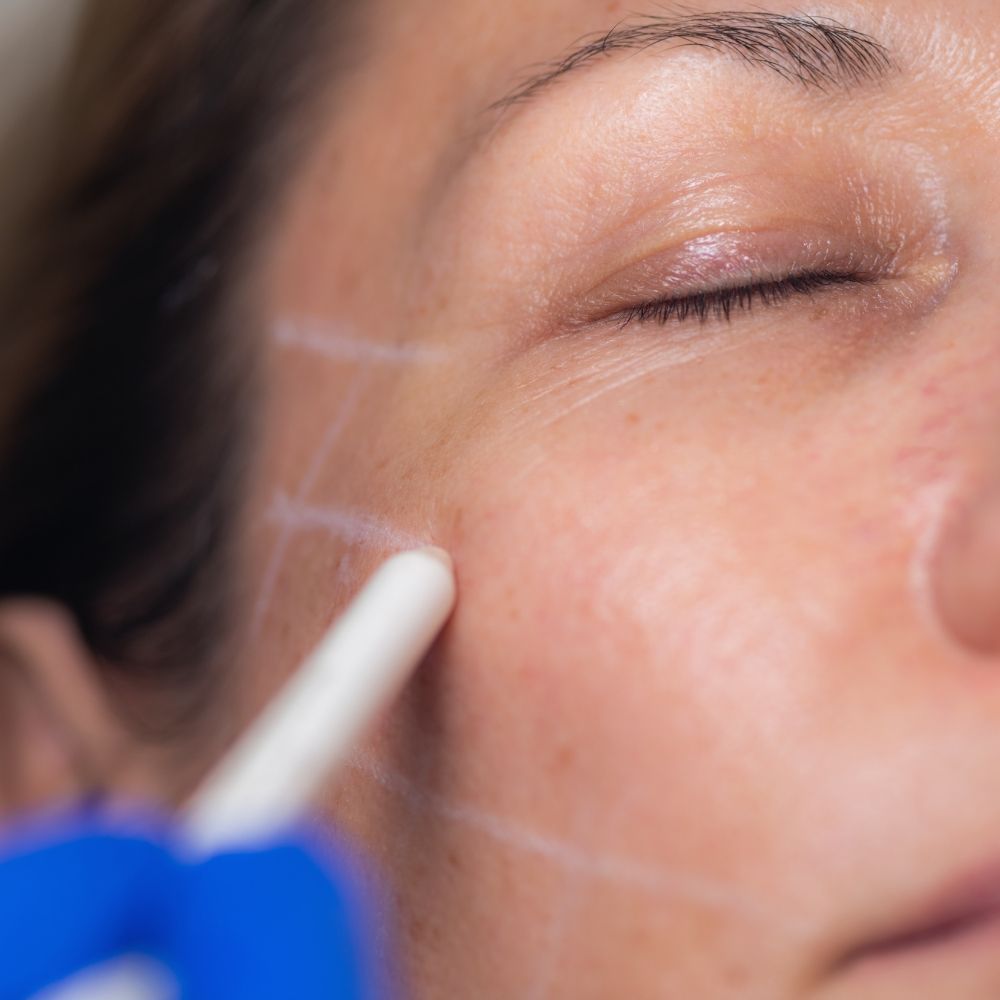
At Superior Health Medical and Wellness, Dr. Akers performs facial thread lifting as a precise, anatomy-driven procedure designed to restore the structural positioning that time and gravity have altered. She approaches each treatment with a detailed plan for which areas to lift, the vector of lift, and the appropriate thread type and gauge for each zone, producing results that look natural because they restore the face's own structural relationships rather than adding foreign volume.
Book Your Appointment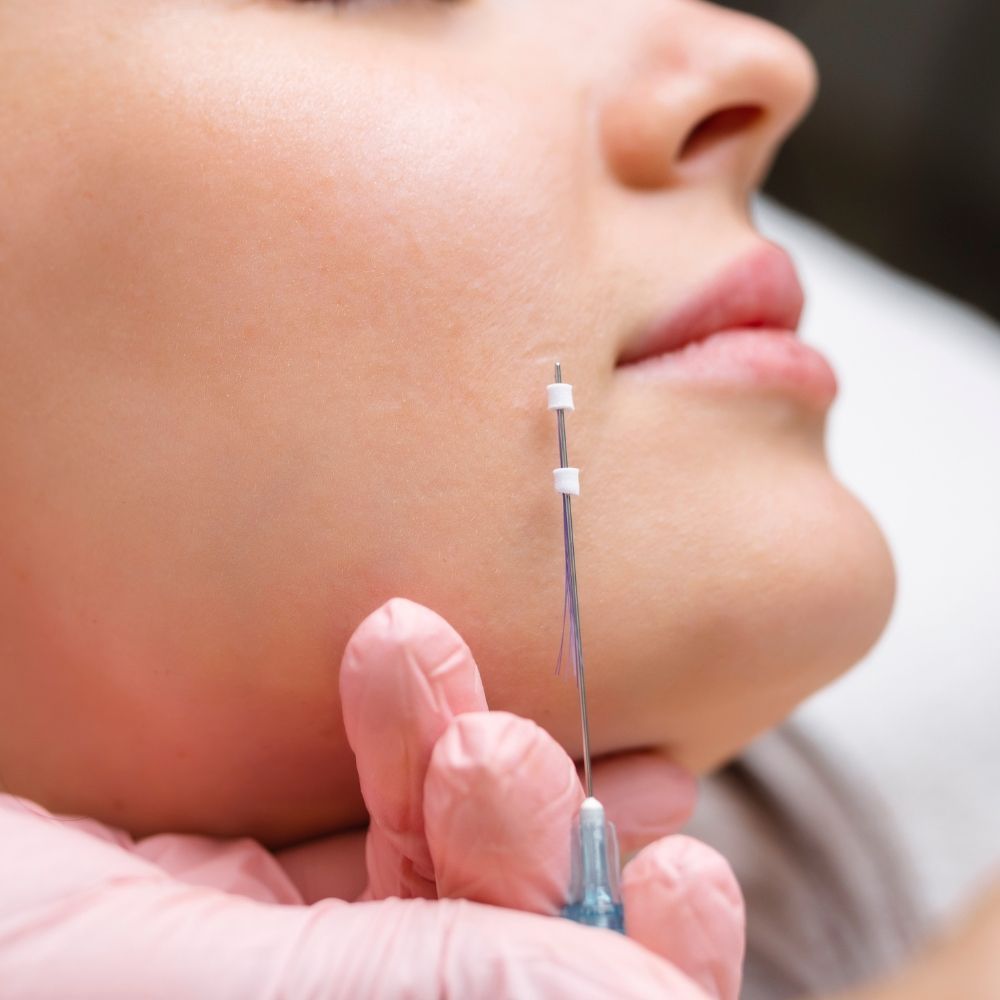
From midface and cheek lifting to jowl treatment and full facial rejuvenation protocols, Dr. Akers provides precision facial thread lifting at Superior Health. Explore the treatment areas below.
Restore the Face.

Adding filler to a face that needs lifting often produces a puffy, overfilled appearance rather than a rejuvenated one. When the underlying problem is tissue descent rather than volume loss, the correct solution is to lift the tissue back to where it belongs. Thread lifting addresses this fundamental cause of facial aging directly.
The skepticism around non-surgical lifting is understandable, but advances in thread technology have produced consistent, clinically meaningful outcomes for the right patients. The key is appropriate patient selection, correct thread choice, and skilled technique. Dr. Akers evaluates all three carefully before recommending thread lifting.
The collagen stimulated by thread lifting continues building for three to six months after the procedure. Patients who assess their results at two weeks are seeing only the beginning. The full benefit of thread lifting, including the collagen-regeneration component, is best evaluated at the three-to-six-month mark.
What Time Has Shifted
Precise thread placement that restores facial structure and lifts what gravity has taken, without surgery or extended downtime.
Book a Consultation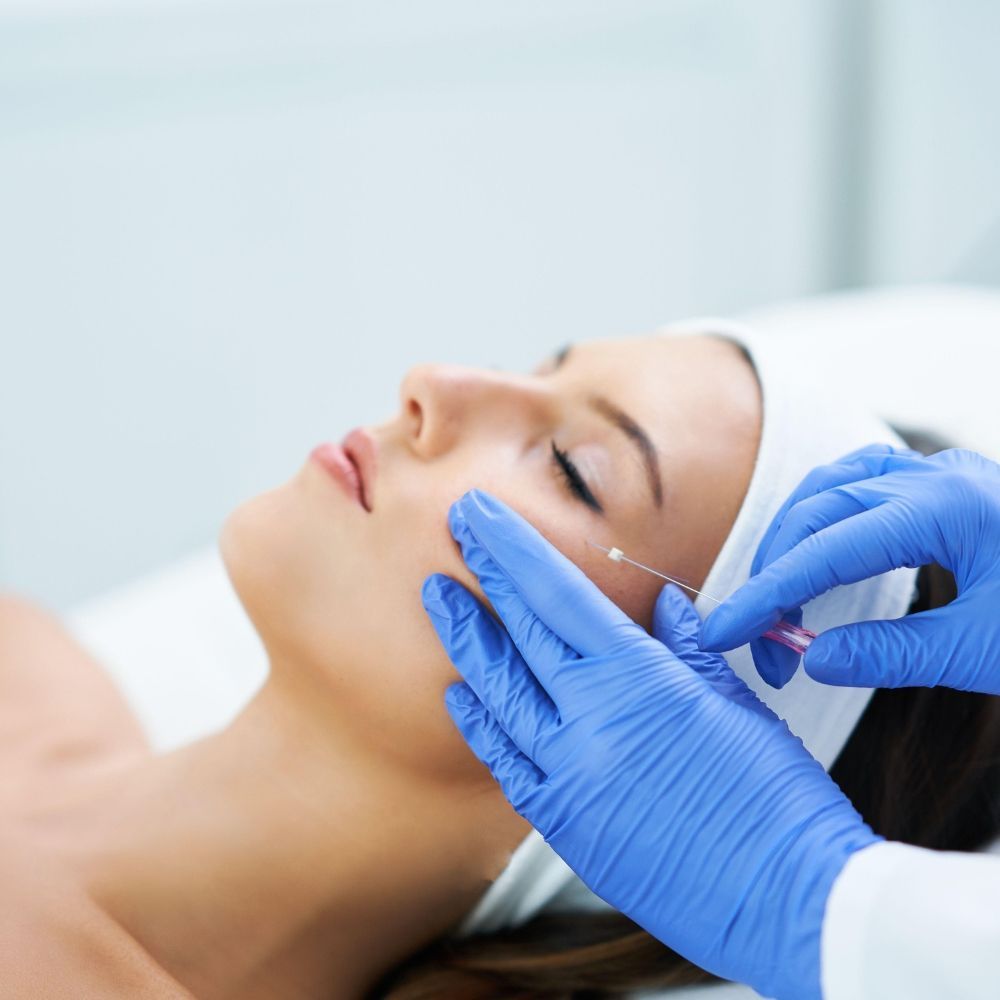
What Each Thread Does
The distinction between thread types is fundamental to understanding what thread lifting can accomplish. Smooth mono threads are thin, un-barbed threads that create a collagen-stimulating scaffold beneath the skin as they dissolve. They improve skin texture, firmness, and quality but do not physically reposition tissue. They are ideal for early-stage laxity and skin rejuvenation.
Barbed or cog threads have small directional projections along their length that anchor into tissue as they are inserted. When the thread is positioned and the introducing needle is removed, the barbs grip the tissue and the thread can be tensioned to reposition it in a desired vector. This creates a physical lifting effect visible immediately after treatment and maintained as collagen builds around the barb anchoring points.
Dr. Akers selects thread type, gauge, and length based on the specific area being treated, the degree of laxity present, the desired lifting vector, and the thickness of the tissue in the treatment zone. Using the wrong thread type for a given application is a common reason thread lifting results fall short of expectations.
Weeks Look Like
In the immediate days after facial thread lifting, swelling, bruising, and mild tenderness at entry points are expected. Some patients notice temporary dimpling or puckering at the thread entry or exit points, which resolves within a few days as swelling distributes. It is important not to evaluate results in the first week as the swelling can obscure or exaggerate the lifting effect.
Activity restrictions in the first two weeks include avoiding strenuous exercise, excessive facial movement, massage of the face, and sleeping face-down. These precautions protect the thread anchoring points while collagen begins forming around them. Dr. Akers provides detailed written aftercare instructions and schedules a follow-up at two weeks to assess the initial healing and answer any questions.
Schedule Your Facial Thread Lift ConsultationAnswered