In This Article
One of the most exciting parts of starting your hair restoration journey is imagining what your hair could look like in the months ahead.
A fuller ponytail. Less visible scalp. A thicker hairline. Or simply feeling more confident when you look in the mirror.
But when can you expect to start noticing those changes?
The beauty of hair restoration is that progress happens gradually, following your hair's natural growth cycle.
Understanding that process makes it easier to recognize and appreciate each stage of your journey.
Why Hair Restoration Is a Journey
Your hair is constantly renewing itself.
Every follicle moves through a natural cycle of growth, transition, rest, and shedding. The active growth phase, known as anagen , can last several years.
In patients with androgenetic alopecia (male or female pattern hair loss), follicles gradually become smaller, producing thinner and shorter hairs.
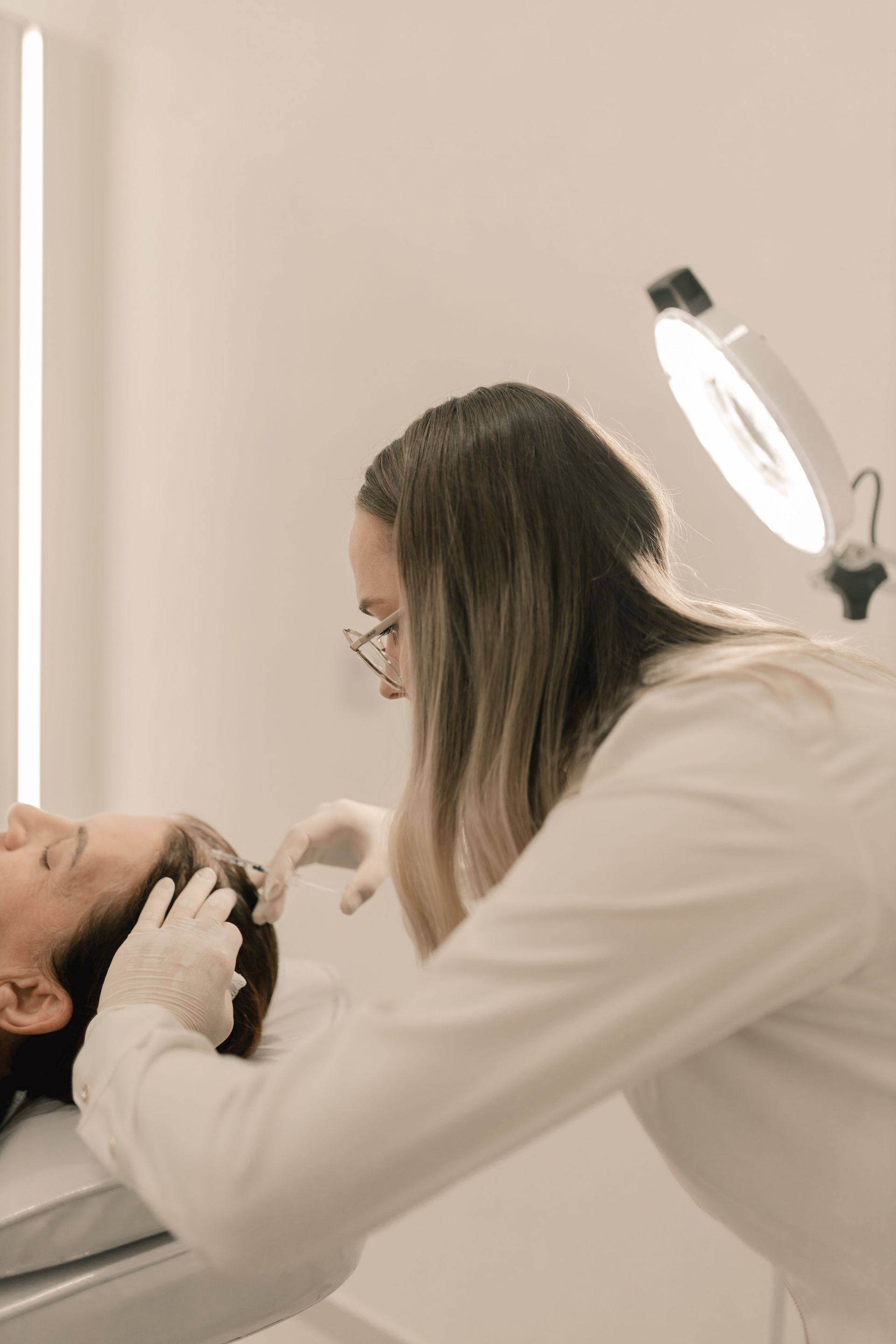
PRP (platelet-rich plasma) delivers concentrated platelet-derived growth factors to the scalp, supporting biological pathways involved in follicular activity and hair growth.
Rather than creating new follicles, my goal is to help existing follicles produce healthier, stronger hair while preserving the hair you already have.
And that's where the journey begins.
Your Hair Restoration Timeline: What to Look Forward To
Every patient's experience is different, but here is a general guide to the changes we look for throughout treatment.
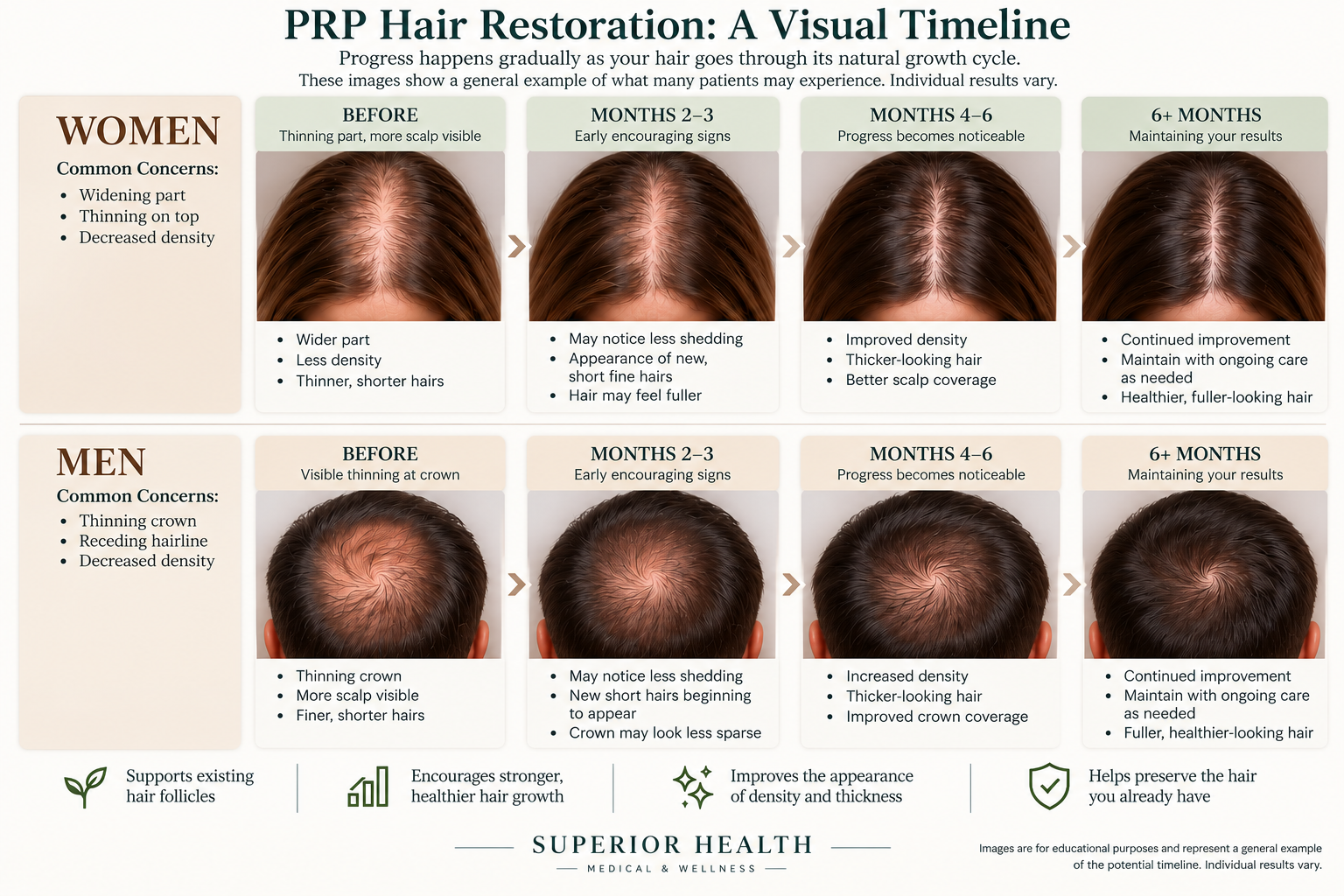
Building the Foundation
Think of this as the beginning of your hair's renewal journey.
During this stage, treatment is focused on supporting the biological environment surrounding your hair follicles.
You won't necessarily see dramatic changes in the mirror yet, but you're taking an important first step toward healthier hair.
The First Encouraging Signs
This is when some patients begin noticing the first signs of progress.
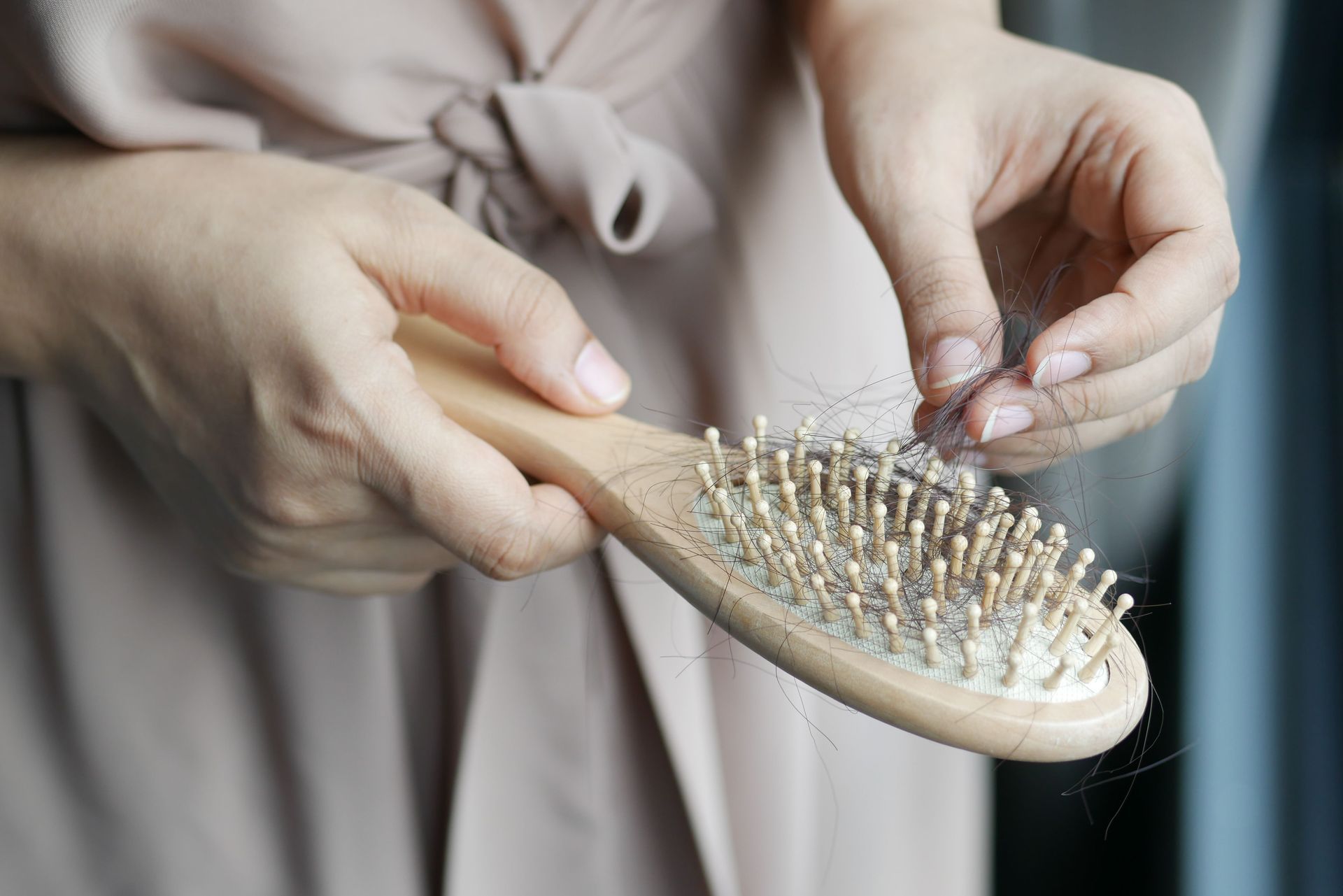
Perhaps you're seeing less hair in your brush, noticing tiny new hairs along your hairline, or feeling that your hair has a little more body.
These early changes can be encouraging as your hair continues through its natural growth cycle.
Watching Your Progress Take Shape
This is often an exciting stage of the journey.
As new hair continues to grow, improvements in density, thickness, and scalp coverage can become more noticeable.
Clinical studies have demonstrated measurable improvements in hair density at approximately three to six months in selected patients receiving PRP treatment.
Small changes build on one another, and over time, those changes can make a meaningful difference.
Protecting Your Progress
Hair restoration isn't just about achieving fuller-looking hair. It's also about maintaining it.
Because common forms of pattern hair loss are progressive, continued medical therapy or maintenance treatments can help support long-term hair preservation.
The goal is to build on your progress while protecting the hair you've worked to restore.
Why Every Hair Restoration Journey Looks Different
No two patients have identical hair, and neither should their treatment plans be.
The type of hair loss, degree of follicular miniaturization, genetics, medical conditions, and treatment consistency all influence outcomes.
This is why identifying the underlying cause of hair loss is so important.
At Superior Health Medical, I approach hair restoration with a personalized strategy rather than a one-size-fits-all procedure.
The Hair Garden Method: Growing and Preserving Healthy Hair
I often compare hair restoration to growing a garden.
A healthy garden doesn't flourish overnight. It develops as the roots become established, the environment is supported, and new growth begins to emerge.
Your hair follicles are similar.
That's the philosophy behind the Hair Garden Method I developed at Superior Health Medical.
My approach combines appropriate medical treatments with regenerative therapies such as PRP, microneedling, low-level laser therapy, and selected adjunctive treatments.
I tailor each treatment plan to the individual patient, with two important goals:
Encourage healthier, fuller hair growth and preserve the hair you already have.
Because successful hair restoration isn't simply about growing more hair. It's about supporting the health and longevity of your existing follicles.
Your Hair Restoration Journey Starts Here
Whether you've noticed a widening part, thinning crown, receding hairline, or gradual loss of hair density, there is value in exploring your options early.
At Superior Health Medical & Wellness in Charlotte, North Carolina, I believe hair restoration should be personal, medically guided, and focused on long-term results.
Schedule your complimentary hair restoration consultation and discover what your hair's next chapter could look like.