In This Article
Have you noticed more hair in your shower drain, a widening part, or a ponytail that doesn't feel as thick as it used to?
Hair loss can be frustrating, especially when you don't understand why it's happening.
But here's something many patients don't realize: Hair shedding and hair thinning aren't necessarily the same thing. Understanding the difference is one of the first steps toward finding the right treatment.
Hair Shedding vs. Hair Thinning: What's the Difference?
Hair Shedding
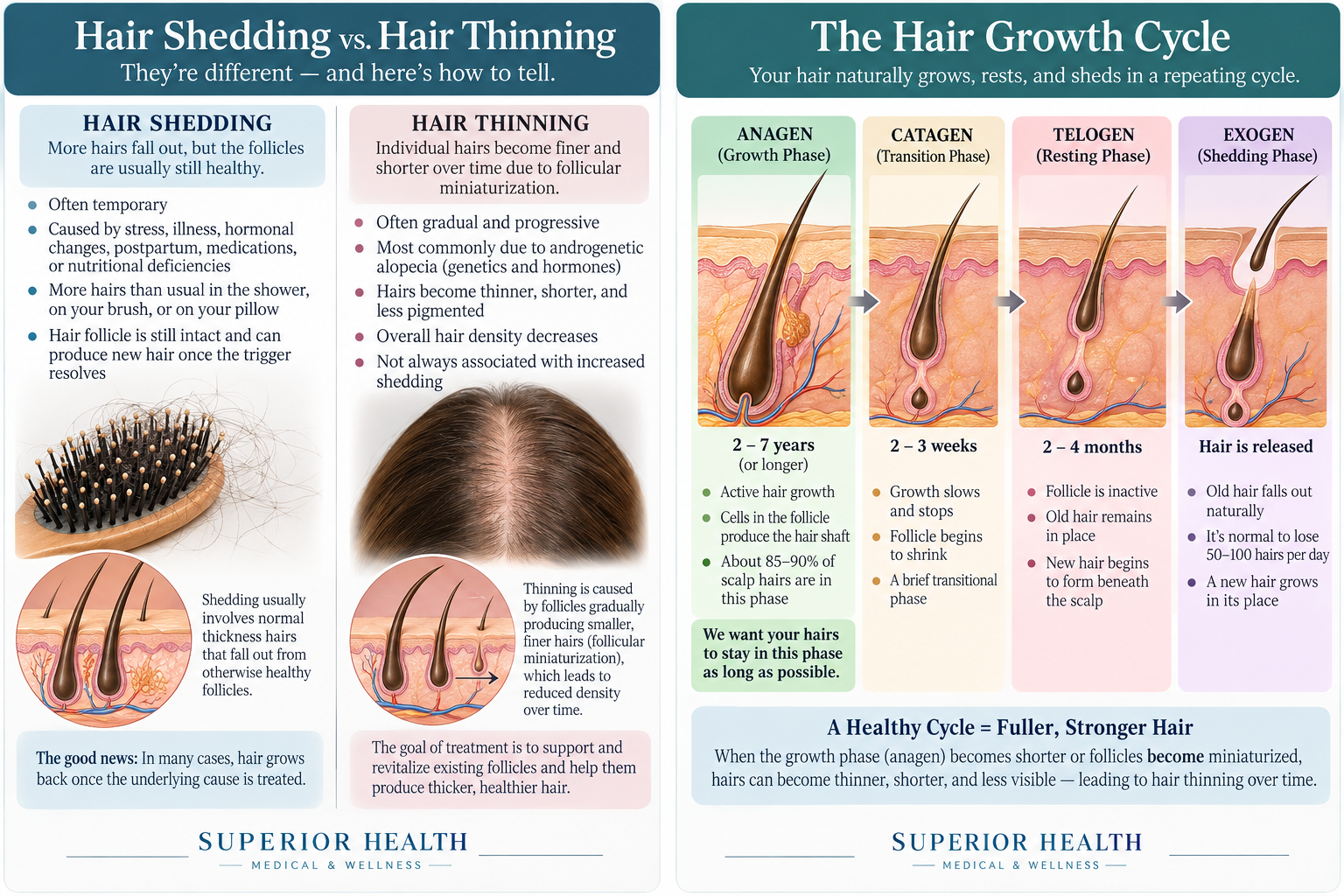
Hair shedding occurs when more hairs than usual fall out. This can happen after illness, significant stress, childbirth, rapid weight loss (regardless of it being from GLP-1 or bariatric surgery or just dieting and exercising), or certain nutritional deficiencies.
One common cause is telogen effluvium , which occurs when more follicles than usual enter the resting phase of the hair-growth cycle.
The encouraging news? In many cases, the follicles remain healthy, and hair can regrow once the underlying trigger resolves.
Hair Thinning
Hair thinning, on the other hand, often develops gradually.
Instead of simply shedding, individual follicles begin producing shorter, finer hairs through a process called follicular miniaturization.
Over time, this leads to decreased hair density, a widening part, or more visible scalp.
This is commonly seen in androgenetic alopecia, also known as male or female pattern hair loss.
Both processes can occur together, which is why identifying the underlying cause is so important.
Understanding Your Hair Growth Cycle
Every hair on your scalp grows from a follicle beneath the skin.
Each follicle follows a repeating cycle of growth, transition, rest, and shedding.
Anagen
This is where we want our hair to spend the most time. During anagen, the follicle actively produces hair, typically for two to seven years.
Approximately 85–90% of scalp hairs are normally in this phase.
Catagen
Hair growth stops, and the lower follicle begins to shrink. This brief phase generally lasts two to three weeks.
Telogen
The follicle rests for approximately two to four months before the next growth cycle.
Exogen
The old hair is released, allowing the normal cycle of renewal to continue.
Losing approximately 50–100 hairs daily can be normal.
The goal of hair restoration is not to stop natural shedding. It's to support healthy follicles, preserve their growth potential, and help maintain a productive growth phase.
What Is Alopecia, and Can Hair Grow Back?
Alopecia is simply the medical term for hair loss, but not all types are alike.
Androgenetic alopecia involves progressive follicular miniaturization. Telogen effluvium causes excessive shedding, while alopecia areata is an autoimmune condition that may cause patchy hair loss.
Certain inflammatory forms of alopecia can permanently damage follicles through scarring.
The important distinction is whether the follicle is still viable.
When follicles remain present but miniaturized, there may be an opportunity to improve hair growth and preserve existing hair.
Once a follicle has been permanently destroyed, however, regenerative treatments cannot reliably recreate it.
This is why early medical evaluation matters.
How Does PRP Fit Into Hair Restoration?
Platelet-rich plasma (PRP) was initially explored in medical fields involving tissue healing and repair.
Researchers became interested in its potential for hair restoration because platelets contain growth factors involved in cellular communication (inherent stem cells) and tissue regeneration.
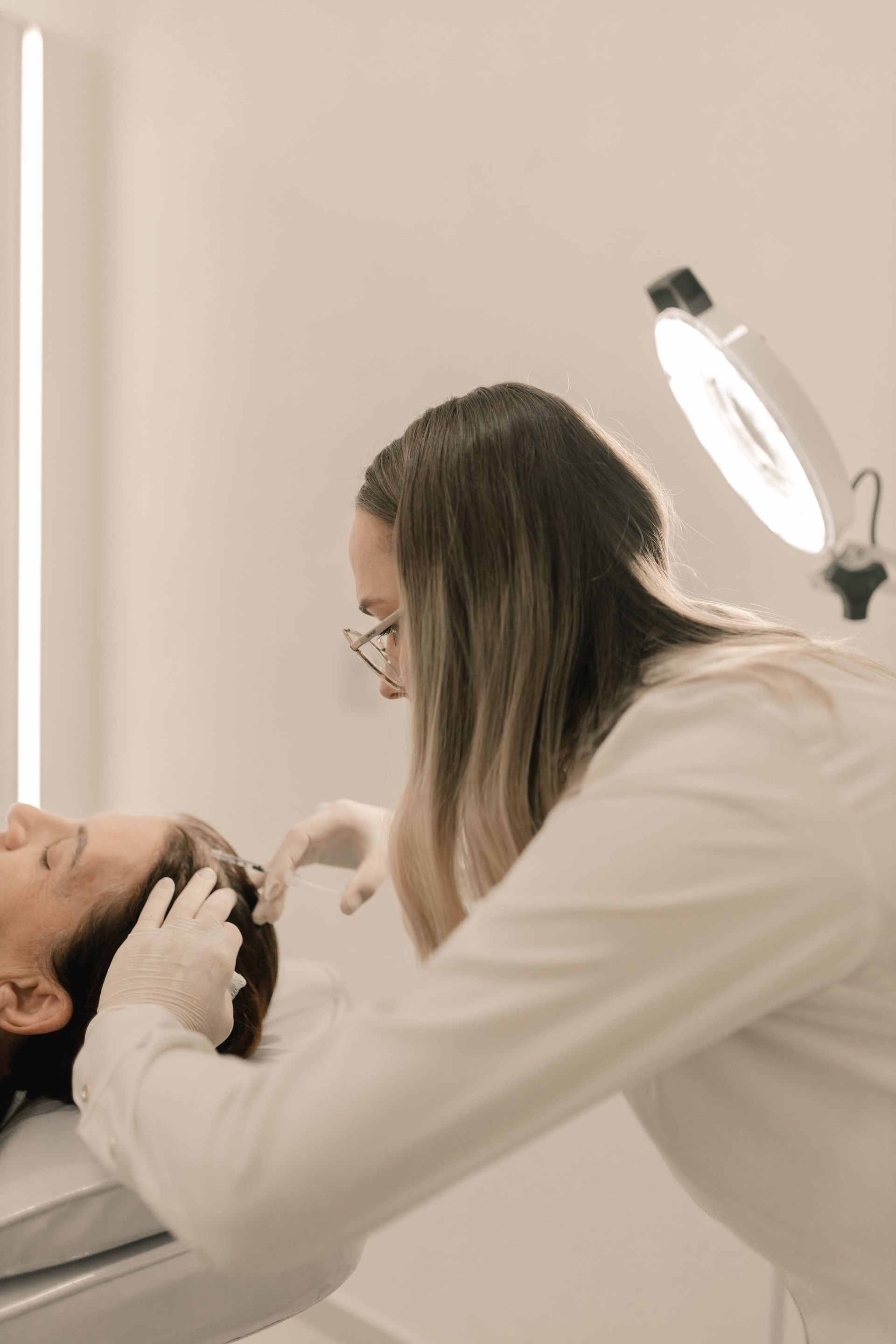
PRP is prepared from a patient's own blood and processed to concentrate platelets within the plasma.
When introduced into the scalp, these platelet-derived signals may help support existing hair follicles and biological pathways involved in hair growth.
Clinical studies have reported improvements in hair density among selected patients with androgenetic alopecia.
However, PRP is not a cure for every type of alopecia, and results depend on the underlying condition, follicular health, and treatment protocol.
Not all PRP preparations are identical, either. Platelet concentration, processing methods, and treatment techniques can vary between practices.
We'll explore why these differences matter in our near future articles.
Our Approach: Restore What We Can, Preserve What We Have, From EVERY angle
At Superior Health Medical & Wellness, my physician-led Hair Garden Method is built around a simple principle:
Healthy hair growth requires a healthy follicular environment.
Just as a garden needs more than seeds to thrive, hair restoration may require more than one treatment.
Depending on the patient's needs, our approach incorporates PRP, microneedling, low-level laser therapy, prescription medical treatments, and selected regenerative adjuncts (all or some).
Our goals are equally important: encourage growth where follicles remain responsive and preserve the hair patients already have.
Don't Wait Until Hair Loss Becomes Advanced
If you're noticing a widening part, receding hairline, increased shedding, or decreased hair density, understanding the cause is the first step.
At Superior Health Medical & Wellness in Charlotte, North Carolina, we offer complimentary hair restoration consultations to help patients explore their options.
Because hair restoration isn't just about growing new hair. It's about protecting the follicles you still have.