In This Article
An evidence-based comparison for patients seeking honest answers about non-surgical hair restoration
Hair loss is personal. It affects confidence, how you see yourself in the mirror, and the decisions you make every day.
When patients come to me looking for real solutions, they often ask about the latest buzzwords: “stem cell therapy,” “regenerative injections,” or “umbilical-derived stem cells.”
I believe patients deserve clarity, not marketing fog. So let’s break this down like a scientist who also cares deeply about getting you honest results.
How These Treatments Actually Work
Both PRP and the treatments marketed as “stem cell” hair restoration aim to improve the environment around your existing hair follicles. Neither creates brand-new follicles on completely bald scalp. They work best when follicles are still present but miniaturized (thinned by hormones like DHT, stress, or aging).
PRP (Platelet-Rich Plasma)
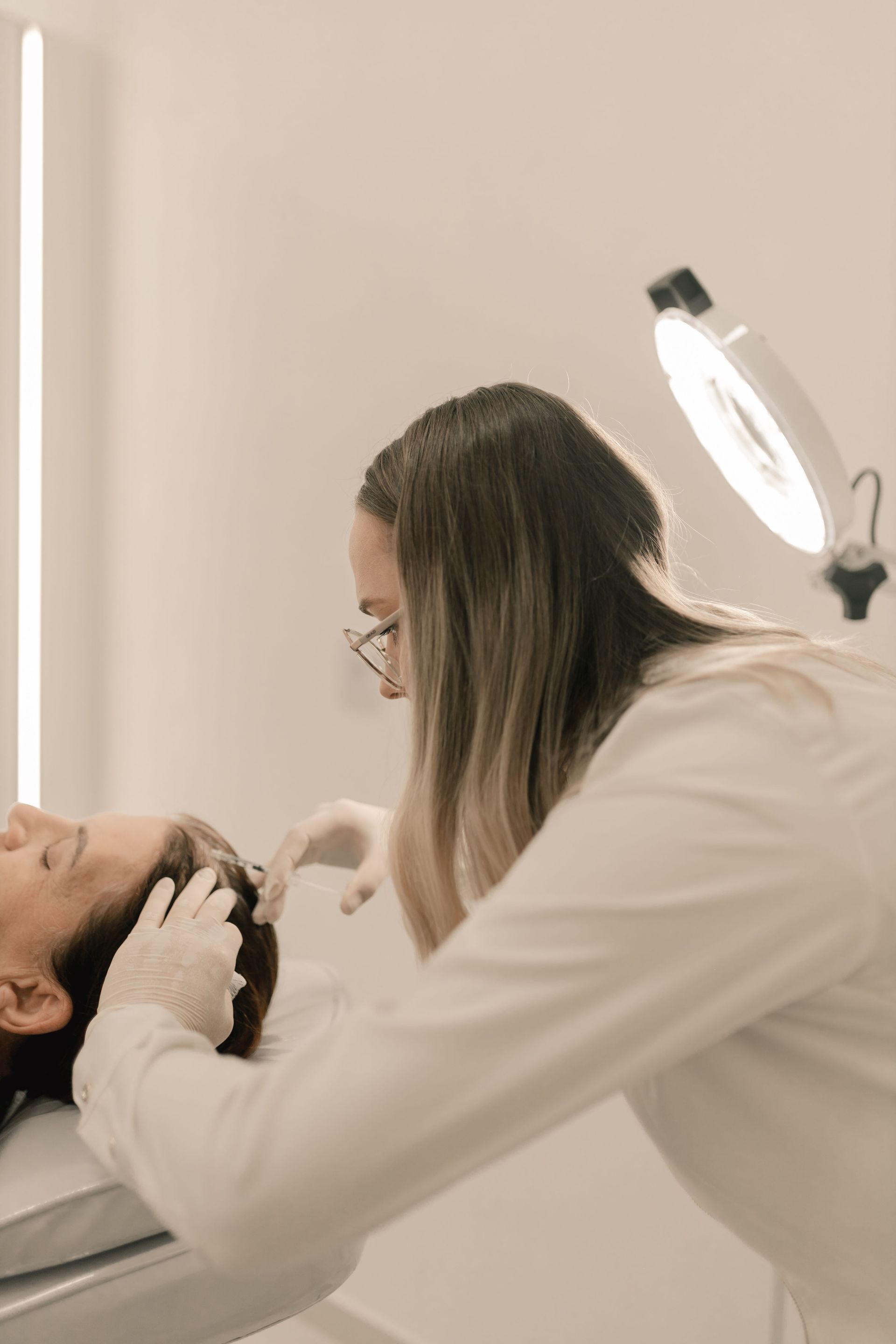
We draw a small amount of your own blood, spin it in a centrifuge to concentrate the platelets, and inject the resulting plasma into the scalp. Platelets are packed with natural growth factors (PDGF, VEGF, IGF-1, TGF-β, and others). These signals help:
- Prolong the active growth (anagen) phase of the hair cycle
- Improve blood supply to the follicle
- Reduce local inflammation
- Encourage thicker, stronger hair from follicles that are still viable
Because it comes from you, the preparation is autologous (your biology, tailored to you).
“Stem Cell” Treatments
Most clinics advertising “stem cell hair restoration” are not injecting living stem cells that engraft, multiply, and rebuild new follicles. What patients usually receive are growth factors, cytokines, and signaling molecules derived from donor umbilical cord tissue (or similar birth-tissue sources) after healthy, screened births. These products are processed to concentrate the regenerative signals and then injected.
The claimed mechanism is similar on the surface: deliver powerful biological messages that may wake dormant follicles, support angiogenesis, and calm inflammation. The key difference is the source (donor-derived material rather than your own blood) and the regulatory and evidence status of that material.
The Evidence: What the Studies Actually Show
PRP has the stronger, more consistent body of clinical data. Multiple randomized controlled trials, systematic reviews, and meta-analyses show that a series of PRP treatments can increase hair density and thickness in patients with early-to-moderate androgenetic alopecia. Response rates commonly fall in the 60–80% range for measurable improvement, with typical density gains reported around 20–40% in responders when protocols are done properly. Results are not permanent without maintenance, but the data are reproducible across many independent groups.
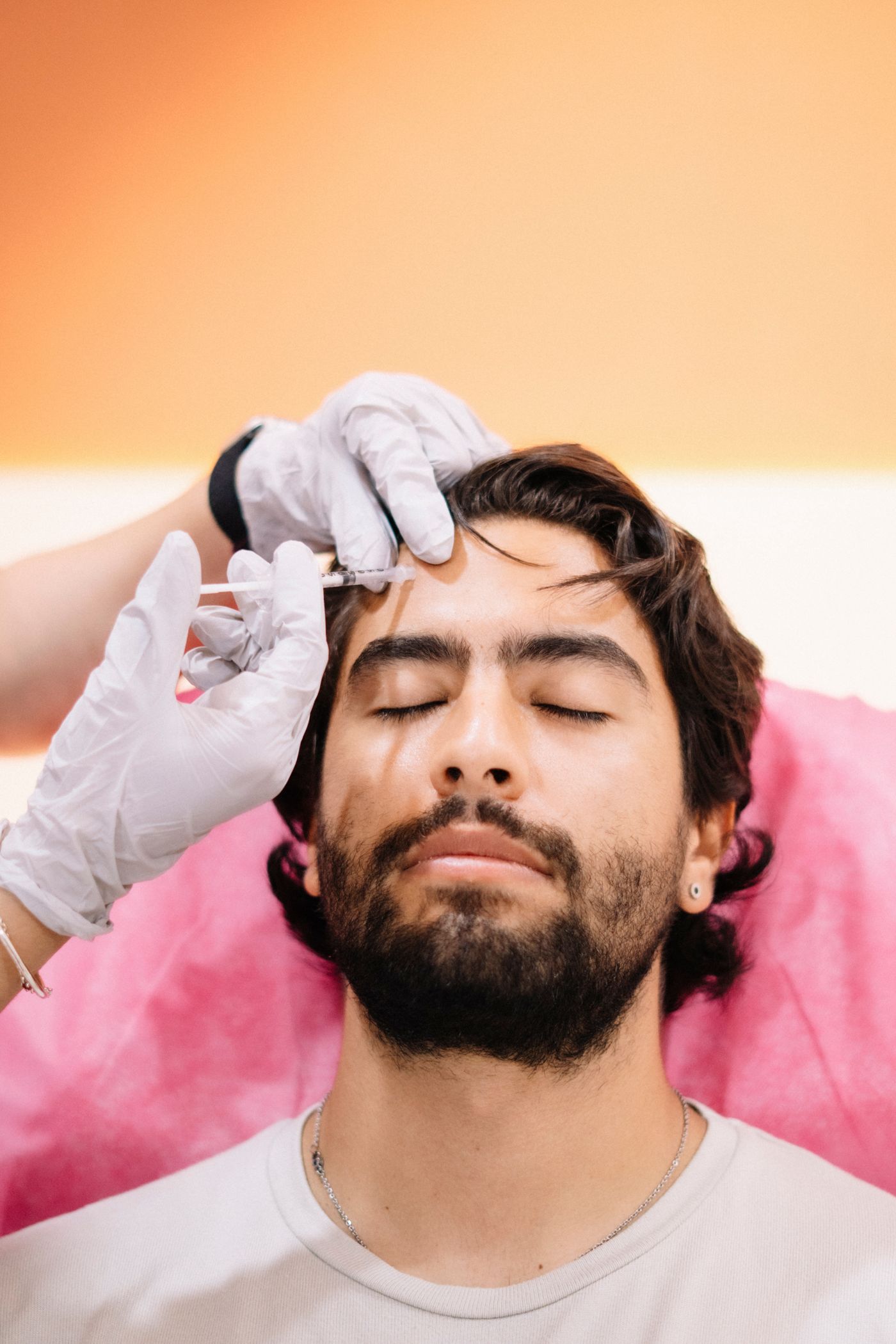
Donor-derived “stem cell” / growth-factor products show biological promise in laboratory and animal studies, and small human series report density improvements in a similar range (often 20–30%). However, the human evidence base is thinner: fewer large randomized trials, more variability in how the products are prepared and delivered, and less long-term follow-up. Many of these products fall under the broader category of regenerative biologics that the FDA has not approved for hair loss.
No stem-cell or exosome product is FDA-approved for treating hair loss in the United States. The only FDA-approved medications remain minoxidil and finasteride.
PRP is used off-label under the practice of medicine, the same way many effective dermatologic and orthopedic treatments are used every day. Clinics offering allogeneic (donor) products operate in a more complex regulatory space and face ongoing FDA scrutiny.
Pros and Cons at a Glance
| Factor | PRP (Your Own Blood) | Marketed “Stem Cell” / Umbilical-Derived Factors |
|---|---|---|
| Source | Autologous (you) | Allogeneic (donor umbilical tissue derivatives) |
| Evidence strength | Stronger (more RCTs and meta-analyses) | Promising but thinner clinical data |
| FDA status for hair | Off-label practice of medicine | Not approved |
| Consistency | Depends on preparation quality | Depends on sourcing and processing |
| Risk profile | Very low (your own cells) | Theoretical additional risks with donor material |
| Cost | Generally more accessible | Often higher |
| Maintenance | Usually required | Usually required |
| Best for | Early–moderate thinning with viable follicles | Same (neither restores fully bald areas reliably) |
Why I Chose to Offer Evidence-Based PRP
I practice medicine the way I want my own family treated: with treatments that have the clearest scientific support, the strongest safety profile, and the greatest transparency.
PRP aligns with that standard for several reasons:
It is your biology.
No donor tissue. No questions about screening, processing, or long-term immune interactions.
The evidence is more robust.
When patients ask “Does this actually work?”, I can point to a larger body of peer-reviewed studies rather than early-stage or clinic-reported results.
Safety and predictability matter.
Mild temporary redness or shedding is the main side-effect profile. I sleep better knowing the material I inject comes from the patient sitting in front of me.
Value and accessibility.
Patients can pursue a thoughtful series of treatments without the premium pricing often attached to “stem cell” branding.
Honesty builds trust.
I would rather under-promise and deliver measurable improvement than lean on the most exciting marketing language of the moment.
That does not mean regenerative approaches using growth factors have no future. Research continues and some protocols show interesting signals. It does mean that, right now, for the majority of patients seeking non-surgical hair restoration, high-quality PRP remains the more evidence-aligned choice.
What to Look for in Any Clinic
Whether you choose PRP or explore other options, ask these questions:
- Exactly what is being injected? Living cells, growth-factor concentrate, conditioned media, or something else?
- Is the product autologous or donor-derived?
- What published evidence supports this specific preparation?
- How do you measure results (standardized photos, trichoscopy density counts)?
- What is the realistic maintenance plan?
At my practice I focus on precise diagnosis (including trichoscopy), consistent PRP preparation, combination strategies when appropriate (microneedling, medical therapy, lifestyle factors), and clear before-and-after documentation. Results take time (typically, noticeable changes begin in 3–6 months), and they are best when follicles are still responsive.
A Science-First Conversation
If you are dealing with thinning hair and want a straightforward, science-first conversation about whether PRP is right for you, I would be happy to evaluate your scalp and discuss realistic expectations. No hype. Just the best evidence we currently have, applied carefully to your situation.
Hair restoration works best when patients and clinicians are on the same page about what the science actually supports. That is the standard I hold myself to, and the one I believe every patient deserves.
Ready for an honest evaluation? Schedule a consultation to see if evidence-based PRP is the right next step for your hair goals.
This article is for educational purposes and does not constitute medical advice. Individual results vary. Always consult a qualified healthcare provider for personalized recommendations.